Virtual "Food Studies" Seminar Series
A new online forum bringing together food studies researchers from across Aotearoa New Zealand to share work, connect with colleagues, and strengthen our collective presence in the field. This is a combined initiative from the Food Studies Association Aotearoa New Zealand, AUT's Centre for Critical Food Studies, and the Australasian Agri-Food Research Network.
To receive a link to any upcoming talks, please contact robert.richardson@aut.ac.nz
Mātauranga Kai
Wednesday, 7 October 2026
In this talk, Dr Nikki Renall will share findings from the Mātauranga Kai project, which explores the connections between kai Māori and wellbeing. Drawing on research across multiple studies, the presentation explores how historical, structural, and social influences have shaped Māori foodways and continue to influence food practices today. It also highlights the role of social media as a contemporary platform for expressing and sharing Māori food culture, and explores how kai practices support cultural identity, wellbeing, relationships, and connections to whenua. Together, these insights informed the development of the Mahinga Kai Framework: Enacting Food Sovereignty, a framework that demonstrates how mātauranga Māori, values, and practices related to kai can support oranga in contemporary contexts.
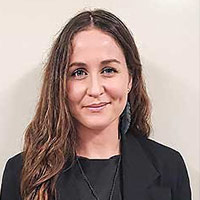
Dr Nikki Renall (Taranaki) is a New Zealand Registered Dietitian and mixed-methods researcher at Massey University’s Research Centre for Māori Health and Development. Her work explores the relationships between kai and wellbeing, with particular attention to equity and the social, cultural, and structural factors that shape food security. Her research spans kai Māori, Indigenous food sovereignty, health equity, and health service improvement, aiming to support Māori aspirations and more responsive food and health systems.
“You Don’t Have to Murder the Poor Curry!”: Indian Women’s Cooking Classes and the Circulation of Culinary Knowledge in Aotearoa New Zealand
Wednesday, 2 September 2026
Indian women’s cooking classes played an important role in shaping how Indian cuisine was shared and understood in New Zealand from the late 1950s. Moving beyond the domestic kitchen, these classes transformed everyday culinary knowledge into structured demonstrations and lessons for wider audiences. Through teaching techniques, ingredients, and recipes, women instructors created spaces where Indian food could be learned, experimented with, and appreciated across communities. These classes did not replace community cooking traditions but extended them into new public settings. By examining these teaching practices, this talk highlights how migrant women circulated culinary knowledge while contributing to the growing visibility and appreciation of Indian cuisine in Aotearoa New Zealand.

Leanne Miranda is a PhD candidate in History at Victoria University of Wellington. Her research explores the intersections of culture, migration, and culinary practices, examining the influence of Indian immigrants, especially Indian women, on New Zealand’s culinary landscape. She is the recipient of the Wellington Historical and Early Settlers’ Association James E. Worsfold Scholarship in 2025 and has presented her work at New Zealand Historical Association’s biennial conference, the New Zealand Symposium of Gastronomy, and at the Aotearoa Gender History Network. Leanne is currently working with the New Zealand India Research Institute and Chair of Malaysian Studies. She has served as board member of the Graduate Association of Food Studies (GAFS), the official graduate student caucus of the Association for the Study of Food and Society (ASFS). She is now co-organising the 18th New Zealand Symposium of Gastronomy (by New Zealand Food History Society), to be held in Wellington in November 2026.
The Finest Obtainable? American Food and Drink in Colonial Singapore
Wednesday, 5 August 2026
Singapore’s potential as a trading hub was recognised very early by the United States, as evidenced by the establishment of a consular presence. Individual travellers and officials could see the potential of Singapore as a market and as stepping stone to other regional markets, but it was a slow process establishing American products in Singapore. Success required negotiating the colonial context in terms of bureaucracy, importers who gave preferential treatment to British goods, and consumers who had allegiance to familiar European and British brands. But it also required negotiating the colonial context of race and class, which different companies and products managed with varied levels of success. There were many more Coolies than colonial elites, but they had less to spend. Working out who should be targeted and what should be sold was thus a complex equation. The quality of American goods also varied. Consumers were doing their own negotiating – of price, safety, and desirability. Yet some American goods – cold storage, domestic refrigeration, and alcohol – profoundly shaped colonial desires. America’s relationship with Singapore is obviously nowhere near as dominant as Britain’s, but in the empty milk, soup and sardine cans and the failed sales of chewing gum, and rye whisky cocktails, we can see a more complex story about the gustatory and consumptive practices in a major British empire port.

Professor NickiTarulevicz (Nicki) is the Head of School of Social Sciences and Humanities in the Faculty of Culture and Society at Auckland University of Technology.
Prior to joining AUT, she held positions at the University of Melbourne, Cleveland State University, and the University of Tasmania. A food historian with a specific interest in the historiography and cultural history of Singapore, Nicki's current work explores how Singapore, as a free port and historic crossroads of trade, exemplifies and presages various elements of globalized food systems. She is the author of Eating Her Curries and Kway: A Cultural History of Food in Singapore (University of Illinois Press, 2013) and has published numerous journal articles and book chapters, including a recent article on meat in colonial Singapore in the journal Social History. She is currently working on a Cultural History of Food Safety in Singapore.
From the Sacred to the Profane? Pinot Priests, Pilgrims and Palooza
Wednesday, 1 July 2026
The production and consumption of wine has long been associated with explicit religion, from Dionysus to the communion wines of varied Christian orders. Indeed, the production of fine wine – in particular Pinot Noir, a highly terroir-sensitive varietal – is seen to originate, historically and genealogically (Appadurai 1996), with the development of Burgundian climat (small, empirically terroir-delineated parcels of land) by 10th-11th century Cistercian monks and later with Dom Pierre Perignon’s, a Benedictine monk from Hautvillers, Champagne, ‘Golden Rules of Winemaking’ published in 1718. The rise of modern secularism has witnessed the significant truncation of explicit religions, with Durkheim (2001 [1912]), Bailey (1982), Latour (2010) and others arguing a correlated increase in implicitly religious beliefs and practices. A number of intersecting modalities, including sovereign individualism and the exaltation of scientific rationalism, are widely associated with implicit religion/religiosity and these find variegated resonance in contemporary Pinot Noir production and consumption. In this presentation I explore these resonances before briefly considering how current sociological wine scholarship is seduced by ‘methodological statusism’.
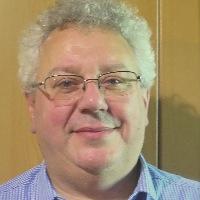
Dr Peter Howland, Senior Lecturer in Sociology Te Kunenga Ki Pūrehuroa Massey University, is a former tabloid journalist by mistake, an anthropologist by training, a sociologist by mortgage/offspring, and a neo-Marxist by moral and analytical compulsion. He has long-standing research interests in wine production and consumption and their role in middle-class constructions of identity, social distinction, elective sociality, reflexive individuality, leisure, rurality and urbanity, time, gifting, etc.
He is the editor of Time & Alcohol: ‘It’s five o’clock somewhere!’ (2025); Wine & The Gift: From Production to Consumption (2023); co-editor (with Prof. Jacqueline Dutton) of Wine, Terroir and Utopia: Making New Worlds (2019); editor of Social, Cultural and Economic Impacts of Wine in New Zealand (2014); and author of Lotto, Long-drops & Lolly Scrambles: An Anthropology of Middle New Zealand (2004). In 2019 he was appointed founding editor of Critical Beverage Studies for Routledge UK